

The Truth About A/B Testing: When It Works and When It Wastes Time
A/B testing is widely regarded as the cornerstone of data-driven growth. Tech giants like Amazon, Netflix, and Booking.com run thousands of automated split tests simultaneously, optimizing everything from recommendation algorithms to pixel padding.
However, for early-stage startups and small-to-medium businesses, A/B testing is frequently misunderstood and misapplied. Teams launch a split test on a page with 300 monthly visitors, change a button color from blue to green, stare at inconclusive dashboard metrics for six weeks, and declare that conversion optimization does not work.
A/B testing is a powerful statistical instrument, but it is not magic. To run experiments that actually move the needle, you must understand sample size realities, formulate real behavioral hypotheses, and avoid common statistical traps.
Do You Have Enough Traffic? The Sample Size Reality Check
Before launching an A/B test, you must ask: Do we possess sufficient statistical power to reach a conclusive outcome within a reasonable timeframe?
To detect a realistic conversion uplift (e.g., a 10% or 15% improvement) with 95% statistical confidence ($\alpha = 0.05$) and 80% statistical power ($\beta = 0.20$), you typically need at least 350 to 500 conversions per variant. If your landing page generates only 20 conversions per month, waiting for 700 total conversions would require nearly three years of testing.
Quantitative vs Qualitative CRO: Choosing the Right Approach
| Optimization Methodology | Minimum Monthly Conversions | Ideal Use-Case | Typical Turnaround Time |
|---|---|---|---|
| A/B Split Testing | 500+ conversions / month | Validating high-confidence changes on high-traffic funnels | 2 to 4 weeks |
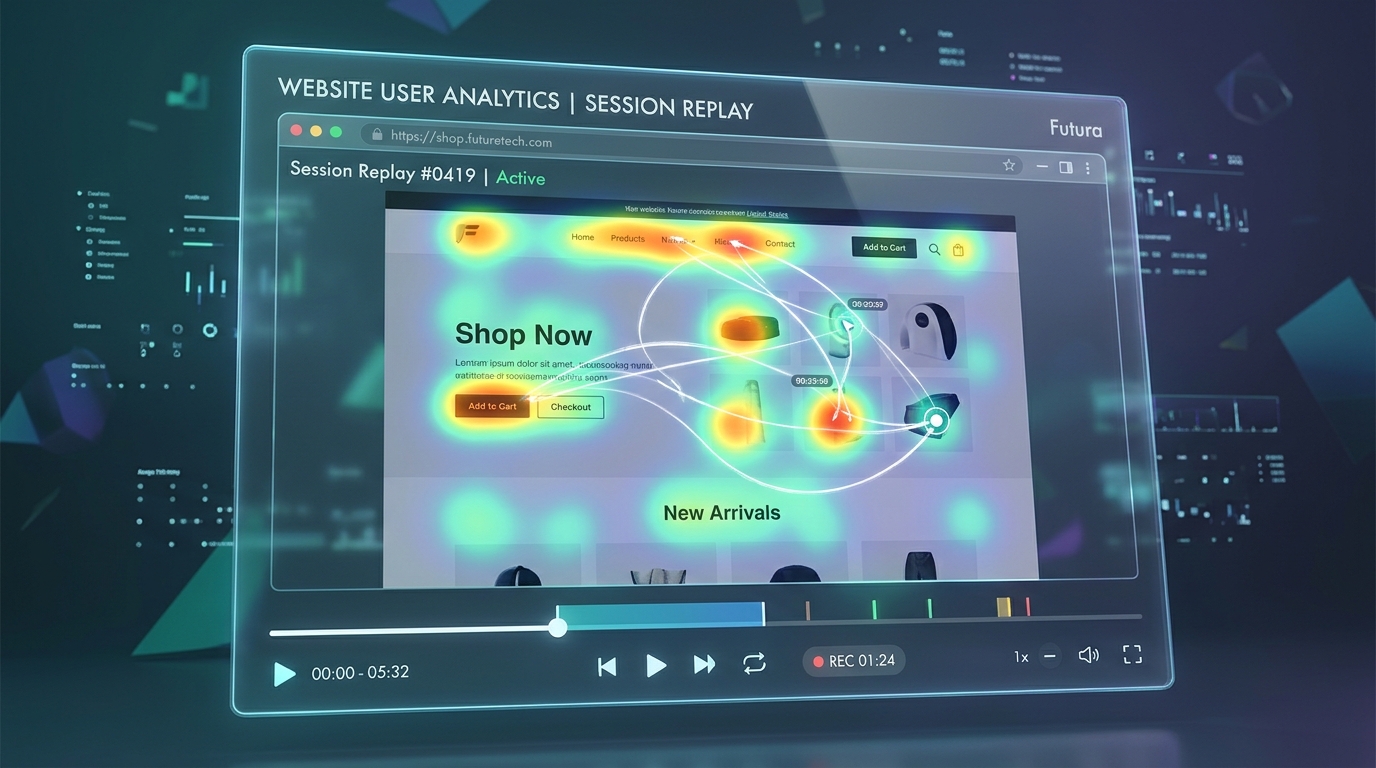
| Session Recording Audits | Any traffic volume (10+ visits) | Spotting broken layouts, rage clicks, and form input errors | 1 to 2 days |
| Customer Exit Surveys | 50+ survey responses | Uncovering unanswered objections and pricing hesitations | 1 week |
| Radical Page Overhaul | Low traffic (< 100 conversions) | Testing bold new positioning when micro-tweaks cannot resolve | 1 to 2 weeks |
How to Form a Real Test Hypothesis (Not a Wild Guess)
A good test never begins with: "Let's see what happens if we change the banner image." It begins with an evidence-backed hypothesis that links an observed problem to a proposed solution and psychological rationale.
Use the standardized Hypothesis Formulation Framework:
"Because we observed [Data / Qualitative Finding], we believe that [Specific Page Change] for [User Segment] will result in [Measurable Metric Lift] because [Psychological Explanation]."
Weak Hypothesis: "Let's change the CTA button from blue to orange to see if clicks go up."
Strong Hypothesis: "Because customer survey data reveals that 42% of visitors do not realize our software integrates with Shopify, we believe adding partner integration logos directly below the hero headline will increase trial signups by 15% because it resolves integration anxiety before visitors bounce."
The 4 Fatal Mistakes Most Beginners Make in Experimentation
1. Peeking Early and Declaring False Winners
The most common mistake in experimentation is checking the testing dashboard on Day 3, seeing a p-value below 0.05, and declaring the challenger a decisive winner. Early data is heavily skewed by variance. A single high-volume corporate order on Tuesday can make a variant look 80% superior purely by chance. Always predetermine your required sample size and let tests run their full scheduled duration.
2. Ending Tests Before Two Full Business Cycles
Consumer psychology changes dramatically between Tuesday morning and Sunday evening. B2B software buyers evaluate tools during work hours, while consumer impulse purchases peak on weekend evenings. Never conclude a test in less than two full calendar weeks (14 days), even if your sample size is reached early.
3. Testing Micro-Variables on Low-Traffic Pages
If you have limited traffic, testing subtle adjustments like font sizes or minor padding tweaks is a waste of time. When traffic is scarce, test bold, high-impact thematic shifts: a completely revised headline angle, an upfront pricing calculator vs a contact form, or an interactive quiz vs a static catalog.
4. Changing External Conditions Mid-Test
Real-World Case Study: How an HR Tech Startup Avoided a Costly Mistake
An enterprise HR tech startup believed their pricing was too high because visitor-to-trial conversion hovered at 1.4%. The executive team wanted to slash prices by 30% across all tiers.
Before implementing permanent price reductions that would have severely damaged unit economics, the growth lead ran an A/B test. Instead of discounting, they tested an alternative headline clarifying that onboarding and setup were completely managed by their white-glove support team.
The challenger variant lifted conversion to 2.3%—a 64% relative increase. The problem had never been price; it was the prospect fear that implementing the software would overwhelm their internal team. The A/B test saved the company over $90,000 in annualized revenue that would have been surrendered through unnecessary discounting.
Step-by-Step Walkthrough: Planning Your First 14-Day Experiment
- Identify the Biggest Funnel Leak: Use analytics to find the step with the highest drop-off rate (e.g., product page to cart, or cart to checkout).
- Gather Qualitative Evidence: Watch 15 session recordings and review customer support chats to understand why visitors leave at that step.
- Formulate a Clear Hypothesis: Write your hypothesis linking the observed objection to your proposed change.
- Build a Challenger Variant: Implement the change cleanly using an A/B testing tool or server-side split mechanism.
- Run the Test for at Least 14 Days: Do not conclude the test early. Let both weekday and weekend behavioral cycles play out.
- Analyze the Results and Document Learnings: Even an inconclusive or negative test is valuable: it tells you that the tested factor does not influence buyer decisions.
Conclusion: Building a Culture of Evidence-Backed Growth
A/B testing is not about validating your personal design preferences or hoping a minor color shift will double sales. It is a scientific methodology designed to eliminate organizational guesswork and replace opinions with empirical customer evidence.
If your traffic is high enough, respect the statistics: run experiments for at least two full business cycles, predetermine your sample sizes, and never peek early. If your traffic is currently too low for statistical significance, redirect your energy toward qualitative research—session recordings, user testing, and customer interviews—and implement bold, high-conviction improvements. When you anchor every experiment in genuine buyer empathy, experimentation becomes your most predictable growth engine.